Short Answer
Yes, you can still have a case, but it follows a different path than a bite claim. Washington’s strict liability statute, RCW 16.08.040, applies only to actual bites. The Court of Appeals confirmed this in Beeler v. Hickman (1988). Non-bite injuries, like being knocked down by a jumping dog, tripped, scratched, or forced into a bicycle crash, fall under common-law negligence. To win, you generally have to show the owner knew or should have known the dog posed a risk, owed a duty to control it, and failed to act reasonably. The most reliable way to prove that is a leash-law violation. Seattle (SMC 9.25.084) and King County (KCC 11.04.230) require leashes of eight feet or less in public, and a violation can be negligence per se.
Detailed Explanation
Relevant Washington Law
Strict liability under RCW 16.08.040 is limited to bites. The Washington Court of Appeals made that explicit in Beeler v. Hickman (1988): the statutory strict liability rule covers actual bites, not other dog-caused injuries.
So when a dog injures you without biting, the strict liability shortcut isn’t available. The claim moves to common-law negligence.
How Liability Is Determined
A non-bite negligence claim generally requires you to show:
- The owner knew or should have known the dog posed a risk.
- The owner owed a duty to control the animal.
- The owner failed to act reasonably under the circumstances.
That’s a heavier lift than a bite claim, where the owner’s knowledge and conduct don’t matter. But there’s a well-worn route to satisfying it.
Leash Laws as Negligence Per Se
The cleanest way to establish negligence in a non-bite case is to prove a leash-law violation.
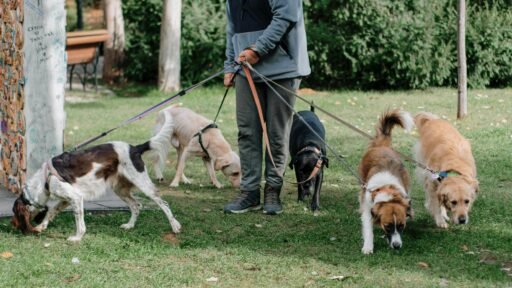
- Seattle: SMC 9.25.084 requires dogs to be on a leash of eight feet or less in public.
- King County: KCC 11.04.230 imposes the same eight-foot requirement.
If an owner lets a dog run loose in an unauthorized public area and that dog knocks you down, the violation can constitute negligence per se. The ordinance violation serves as automatic proof that the owner failed to use ordinary care, so you don’t have to litigate reasonableness from scratch.
Typical Non-Bite Scenarios
- A large dog jumps on a pedestrian and knocks them to the pavement.
- A loose dog charges a cyclist, who crashes avoiding it.
- A dog trips someone on a trail.
- A dog scratches but doesn’t bite.
Each can produce serious injuries: fractures, head injuries, road rash, and more. The lack of a bite doesn’t make the injury minor.
Common Insurance Issues
Recovery still typically runs through the owner’s homeowners or renters insurance. Because the claim sounds in negligence rather than strict liability, expect the insurer to scrutinize whether the owner really breached a duty, which is exactly why the leash-law angle matters.
When to Contact a Lawyer
Non-bite cases are more contested than bite cases, and proving negligence takes evidence. If you were knocked down or crashed because of a loose dog and got hurt, a lawyer can build the negligence claim, anchor it in the applicable leash ordinance, and pursue the owner’s coverage.