

How to Request Dog-Bite and Animal-Control Records Outside King County
The Public Records Act is the same everywhere in Washington. The agency holding your records is not, and identifying it correctly is most of the work.
Who is legally responsible after a dog attack, how Washington strict liability works, and where negligence, provocation, property ownership, and third parties fit in.

The Public Records Act is the same everywhere in Washington. The agency holding your records is not, and identifying it correctly is most of the work.
Tacoma's dangerous dog labels come straight from state law, and they answer a public-safety question. A civil claim asks something different, which is why the two can reach different results.

Tacoma's leash rule is stricter than most people realize and proves less than most people assume. Both of those are worth understanding before a claim starts.

The county's website says dogs must be leashed. The code says the dog must be "under control," and the definition of that phrase does more work for an injured person than the shorthand does.

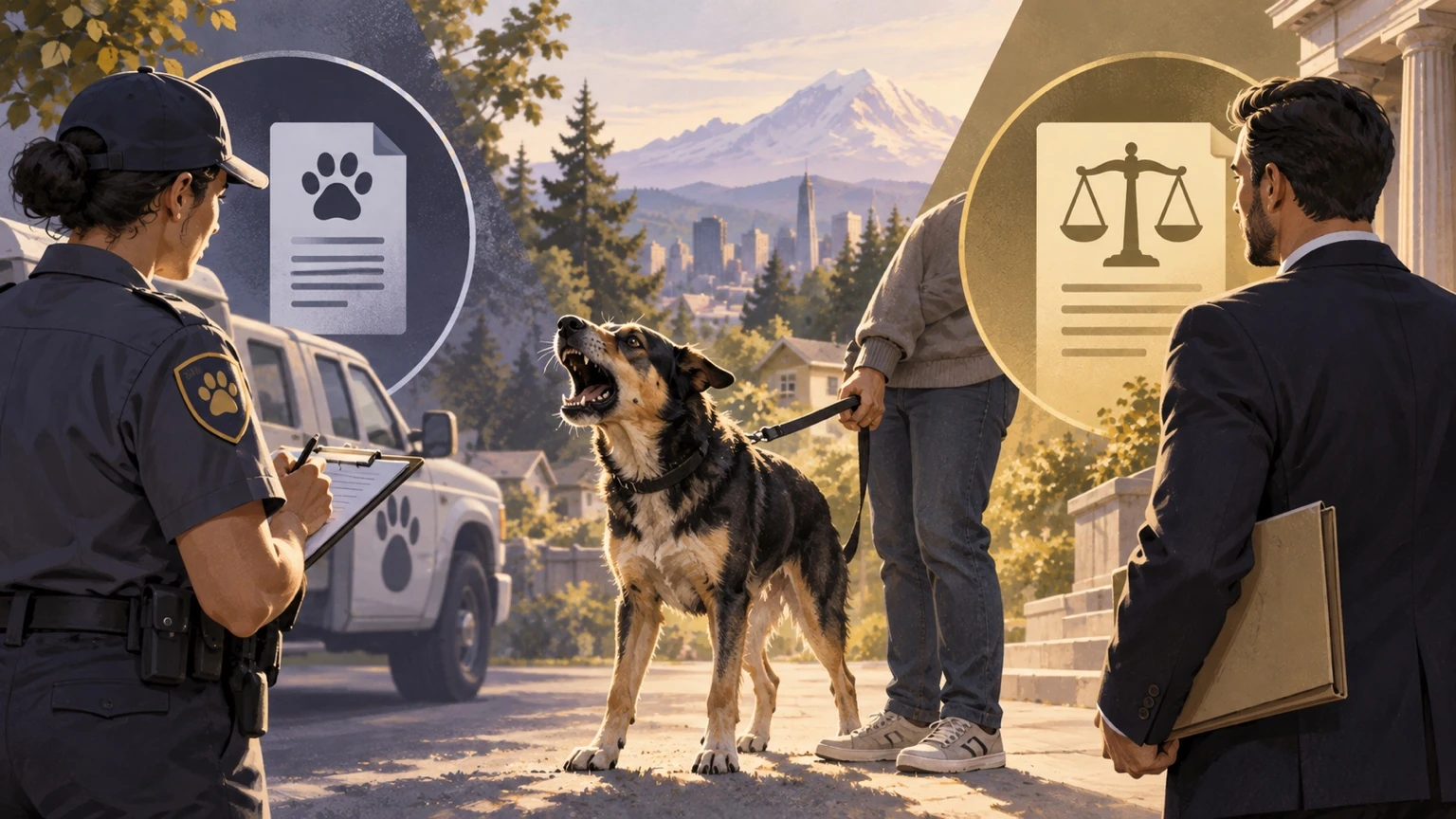
Two systems are looking at the same dog and asking different questions. Learning which one you are in explains why the answers can diverge.

Kirkland puts a 24-hour reporting duty on the dog's owner, not on the person who was bitten. Knowing that changes what you ask for and when.

Being bitten at a grooming salon or boarding facility raises two questions that get answered separately: who owned the dog, and who was running the room.

Liability and collectability are two different questions. An uninsured owner is still a liable owner, and "no insurance" is a claim worth checking before you believe it.

Animal control closed the file without citing anyone. That tells you what the agency decided about the dog. It does not tell you what the owner owes you.

A dog bite at a friend's house is still a Washington dog-bite claim when the statutory conditions are met. The key property question is lawful presence, not whether the child knew the family.

Bellevue's off-leash areas suspend the city's leash rule inside a specific fence line. They do not suspend the state statute that makes a dog's owner liable for a bite.

Most Washington dog bite claims must be filed within three years (RCW 4.16.080(2)). Children’s deadlines are tolled under RCW 4.16.190. Here’s what that means.

Dog attacks in Everett and throughout Snohomish County follow a pattern that attorneys who handle Washington injury cases…

Washington’s strict liability statute holds dog owners responsible for bites regardless of the dog’s history. Here’s what RCW 16.08.040 requires and what it doesn’t.

Seattle treats a dog as “at large” if it isn’t on a leash 8 feet or shorter. Here’s how retractable leashes catch owners off guard.

Under RCW 16.08.040, Seattle dog owners are liable for bite injuries — but recovery runs through insurance, and the early “MedPay trap” can cost you your claim.

Washington abolished the “one free bite” defense. Under RCW 16.08.040, a dog’s clean history doesn’t shield the owner from liability for the first bite.

A dog bite at a Seattle taproom can mean claims against both the owner and the business. Here’s how strict liability and premises liability stack up.

When a Rover or Wag dog bites someone, Washington law usually still points to the owner — but the insurance issues get complicated fast.

Landlords aren’t automatically liable for a tenant’s dog in Washington. Here’s the narrow legal path where a property owner can still be held responsible.

Washington’s provocation defense rarely succeeds in court. Here’s what the law actually requires — and why most bite victims have less to worry about than they think.