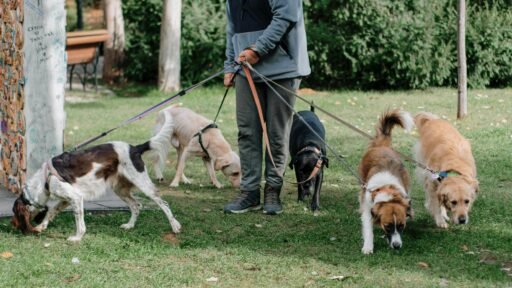

Seattle Dog Owners May Be Using Leashes That Are Too Long
A lot of Seattle dog owners know their dogs need to be leashed in public. Fewer realize that the length of the leash matters too.
Under Seattle Municipal Ordinance 121178, a dog may be considered “at large” when it is off the owner’s property and not controlled by a leash that is 8 feet long or shorter. That means a dog can technically be leashed and still fall outside the city’s definition of proper control if the leash is too long.
That detail catches people off guard, especially because retractable leashes are so common.
Why the 8-Foot Limit Matters
Seattle’s rule is aimed at control. On a quiet residential block, a long leash may not feel like a big deal. But on a crowded sidewalk, near the waterfront, outside a coffee shop, or along a busy trail, a few extra feet can change how quickly an owner can respond.
A dog at the end of a 15-foot retractable leash can reach another person before the owner realizes what is happening. The leash can stretch across a walkway. A dog can lunge toward another dog, a cyclist, a child, or someone simply passing by.
Most of these situations are not about a “bad dog.” They are about distance, timing, and whether the owner can keep the dog close enough to prevent a problem.
That is why Seattle’s 8-foot rule is worth knowing. It gives dog owners a clear standard before something goes wrong.
The Retractable Leash Problem
Retractable leashes are popular because they give dogs more freedom to sniff, explore, and move around. But many common retractable leashes extend well beyond 8 feet. Some stretch to 15, 20, or even more than 25 feet.
That may be fine in the right setting, but it can create problems on Seattle sidewalks and other public spaces where close control matters.
If the leash is locked short, the owner may still be keeping the dog within Seattle’s limit. But once that leash extends past 8 feet off the owner’s property, the situation changes. The dog may be outside the control standard described in the city ordinance.
For owners, the safest habit is simple: use a fixed leash or keep a retractable leash locked short in busy public areas.
Where This Comes Up in Real Life
This kind of issue can happen almost anywhere people and dogs share space.
A dog on a long retractable leash may cross in front of someone walking downtown. A thin leash line may stretch across a path before a cyclist sees it. A dog may reach another dog on the sidewalk before either owner has time to react.
Seattle has plenty of places where that matters: crowded neighborhood sidewalks, waterfront paths, parks, transit stops, apartment entrances, and shared trails.
In those spaces, leash length is not just a technical rule. It affects how much control the owner actually has.
What Dog Owners Can Do
Dog owners do not need to overthink this. A few simple habits go a long way:
- Use a leash that is 8 feet or shorter for city walks.
- If you prefer a retractable leash, keep it locked short when you are on sidewalks, near crowds, or around other dogs.
- Give extra space near children, cyclists, runners, and people entering or exiting buildings.
It also helps to think about the setting. A quiet open area is different from a narrow sidewalk. If there is not enough room for people to pass comfortably, the leash should be short enough that your dog stays close.
If You Were Hurt by a Dog on a Long Leash
If you were bitten, tripped, or knocked down by a dog on a long leash, the length of the leash may be worth documenting.
Try to write down what you remember while it is still fresh. Where did it happen? Was the leash fully extended? How far was the dog from its owner? Did the owner appear able to control the dog before the incident?
Photos of the location, your injuries, and anything showing how the leash was being used may help preserve the facts. It is also important to get medical care for a dog bite, even if the injury looks small at first.
How the Rule May Matter After an Injury
A leash longer than 8 feet does not automatically prove that a dog owner is legally responsible for an injury. It also does not decide a claim by itself.
But it may provide useful context.
If a dog was off the owner’s property and being handled on a leash longer than Seattle allows, that fact may help show how much control the owner had at the time. Depending on what happened, it could become part of the broader picture when evaluating a dog bite, trip-and-fall, or other dog-related injury.
A Small Detail That Can Make a Big Difference
For Seattle dog owners, the safest approach is to treat 8 feet as the public-space limit. Measure the leash, lock the retractable short, and keep dogs close in crowded areas.
And for anyone injured by a dog that was not being kept under control, the leash length may be one detail worth paying attention to. It may not answer every legal question, but it can help explain how the incident happened.