

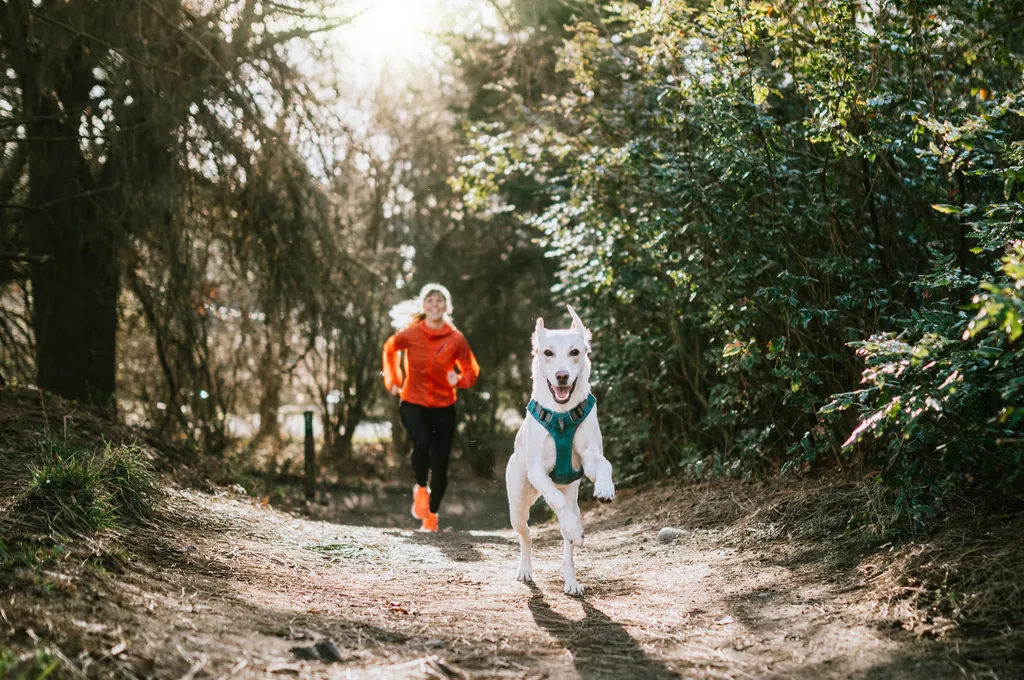
Marymoor's off-leash area lets dogs run without a leash. It does not switch off Washington's dog-bite statute. Here is how RCW 16.08.040, King County's park rules, and the provocation defense actually fit together after a bite at Marymoor.
Marymoor Park has one of the busiest off-leash dog areas in the region, and people who are bitten there often assume the setting answers the legal question. It does not. Washington's dog-bite statute, RCW 16.08.040, makes the owner of a dog liable for the damages the dog causes when it bites a person in a public place, regardless of whether the dog had ever bitten anyone before and regardless of whether the owner knew the dog might bite. The statute contains no exception for designated off-leash areas.
What the off-leash setting does change is the factual picture around the bite. It affects what a reasonable visitor expected, where inside the park the incident happened, whether the dog was under any kind of control, who was actually handling the dog, and what evidence exists afterward. Those facts can matter a great deal. They can matter to a provocation defense, to whether the person being blamed is the statutory owner at all, and to any separate negligence or premises theory. They do not, on their own, turn off the statute.
That distinction is the reason this article exists. King County's own Marymoor rules put it more bluntly than most law firm pages do: off-leash does not mean out of control. The park permits dogs to run free inside a defined area. It does not tell owners that they stop being responsible for what their dog does.
Does Washington's Dog-Bite Statute Still Apply at Marymoor?
Yes, by its terms. RCW 16.08.040 provides that the owner of a dog is liable for damages when the dog bites a person who is in a public place, or who is lawfully in or on a private place, and it says that liability applies regardless of the dog's former viciousness or the owner's knowledge of that viciousness. The statute includes a separate exception for the lawful application of a police dog, which rarely comes up in a dog park context.
Two parts of that sentence do most of the work in a Marymoor case.
The first is the public place requirement. Marymoor's off-leash area sits inside a King County park, and King County's Marymoor Park Off-Leash Dog Area page describes it as roughly a 40-acre off-leash dog area at 6046 West Lake Sammamish Parkway NE in Redmond. A visitor who is lawfully inside a public county park is not in some legal gray zone.
The second is the phrase about former viciousness and owner knowledge. Washington does not require an injured person to prove that the dog had a bite history, that the dog had been formally declared dangerous, or that the owner had been warned. The Washington Supreme Court has described the statute as imposing strict liability where it applies, meaning the injured person ordinarily does not have to prove negligence or prior knowledge as part of the statutory claim. The court's slip opinion in Finch v. Thurston County, No. 91761-2 (Wash. Oct. 13, 2016), states that proposition directly.
This is why the shorthand "one-bite rule" is a poor fit for Washington. The statutory rule does not give a dog a free first bite, and it does not condition liability on prior notice. Framing a Marymoor claim as though a prior bite must be found first misstates the statute.
None of that makes liability automatic. The statute has defenses, and the identity of the "owner" is a real question when a dog is being handled by someone else. Those issues are covered below.
What "Off-Leash" Actually Means at Marymoor
The off-leash area is a defined space with rules attached, not a suspension of ordinary responsibility.
King County's official Marymoor off-leash area rules tell visitors to expect dogs running free under their owners' voice control, and they ask handlers to keep dogs from jumping on or interfering with other people and other dogs. The rules state plainly that off-leash does not mean out of control. That single line is more useful to a reader than most general dog-bite explainers, because it separates two things that get blurred together: permission to be off leash, and permission to be uncontrolled.
Location inside the park matters too. Dogs must be leashed outside the designated off-leash boundaries, and King County's general parks rules for dogs and other pets reflect the same limit. A bite in the parking lot, on a trail, near the fields, or anywhere else outside the boundary is not an off-leash-area incident at all, and a park-rule violation may be part of the picture.
County code uses similar language. King County Code Title 11 defines "under control" to include either leash restraint or competent and effective voice or signal control that keeps the animal from approaching bystanders or other domestic animals and from causing property damage. The same title treats a dog at large as a nuisance while carving out designated off-leash areas. Read together, the park rules and the code point the same direction. An owner at Marymoor is exercising a specific permission, not shedding a duty.
A practical way to think about it: being lawfully off leash answers where the dog was allowed to be. It does not answer what the dog did, or what the handler did about it.
The Provocation Defense
Washington's statute contains an express defense. RCW 16.08.060 makes proof that the injured person provoked the attack a complete defense to a dog-bite claim. Complete means what it sounds like. If provocation is established, the claim fails rather than being reduced.
Because of that, the moments immediately before a bite are usually the most contested facts in an off-leash case. Dog park behavior involves a lot of contact that looks ambiguous on a phone video: reaching toward a dog, grabbing a collar, pulling a toy, stepping between animals, picking up a small dog, restraining a dog by the harness. Whether any of that amounts to provocation under Washington law is fact-specific, and it is not the sort of question that gets resolved by a general article.
King County has its own definition of provocation in its animal-control code. KCC 11.01.350 describes provocation as tormenting, agitating, or harassing an animal immediately before an attack, chase, or menacing behavior, and it excludes actions taken in defense of oneself, another person, an animal, or property. That definition is useful local context, particularly if animal control is investigating. It is a county animal-control definition, not the text of the state civil statute, and it should not be treated as the controlling standard for every civil claim.
Three hypotheticals, offered only to show how differently the same word can play out. These are hypothetical illustrations, not case results.
Hypothetical one. A visitor kneels down and reaches for an unfamiliar dog's face without asking the handler. The dog bites. The owner argues provocation.
Hypothetical two. A visitor grabs a dog's collar to pull it away from her own dog after a scuffle starts. The dog turns and bites her hand. The owner argues provocation. She argues she was acting to protect an animal, which the county definition treats differently from tormenting or harassing.
Hypothetical three. A visitor is standing near the gate, not interacting with any dog, when a dog runs up and bites her leg. Provocation is a much harder argument on those facts.
The point is not who wins. It is that the defense is real, it is written into the statute, and how a person describes their own conduct in the first few hours after a bite tends to matter later.
Does Going to an Off-Leash Park Mean You Assumed the Risk?
This is the question most Marymoor visitors ask first, usually in the form "was it my fault for being there."
There is no categorical rule that entering an off-leash dog park waives a bite claim. RCW 16.08.040 contains no dog-park exception, and the research behind this article did not locate primary Washington authority creating one. Signage and park rules that tell visitors to expect dogs running loose describe an environment. They are not a liability release, and they do not rewrite the statute.
The honest version of the answer also runs the other way. It would be just as wrong to promise that an assumption-of-risk argument always fails. Assumption of risk in Washington depends on the theory of the claim and on the specific facts, and a defense lawyer will raise it. Someone who deliberately inserted himself into a dog fight is in a different position from someone who was bitten while standing still.
What can be said with confidence is narrow and worth stating clearly: the presence of an off-leash area does not, by itself, remove an owner's statutory liability for a bite. Anything more categorical than that should come from an attorney reviewing the actual facts.
Who Could Be Responsible?
The dog's owner
RCW 16.08.040 is written in terms of the dog's owner. In most Marymoor incidents the owner is present, and identifying the owner is a matter of getting a name, a phone number, and a license or tag before people scatter. In other cases the owner is not there at all, which is where the next question starts.
A dog walker or handler
Marymoor requires a permit for professional dog walkers. King County's off-leash area page describes eight permits issued annually by lottery. That fact is genuinely useful, but not for the reason people assume. The permit does not make a walker civilly liable, and it does not convert a walker into the statutory owner. What it does is create an evidence trail. A permitted commercial walker has a business name, a client relationship with the dog's owner, and records.
Whether a walker, sitter, or other handler can be held responsible is a separate legal question analyzed under common-law negligence rather than under the bite statute, and it depends on the facts. The two theories should not be merged. A page that tells readers a dog walker is strictly liable under RCW 16.08.040 is telling them something the statute does not say.
A property owner or public entity in unusual circumstances
Washington appellate courts have recognized that dog-bite facts can support a separate premises-liability theory in some circumstances. Oliver v. Cook, No. 47645-2-II (2016), is useful background on that point. It involved private premises, and its reasoning should not be transplanted onto a county park without analysis.
The more common misconception is simpler. Marymoor is a King County park, so people assume King County is a defendant. County ownership establishes where the bite happened. It does not establish a claim. A tort claim against a public entity needs an independent legal basis, and it comes with procedural requirements that do not apply to a claim against a private dog owner. RCW 4.96.010 and RCW 4.96.020 govern local-government tort claims and require a claim to be presented before suit, with RCW 4.96.020 providing that an action generally cannot be commenced until 60 calendar days after the claim is presented.
If a public-entity theory is genuinely in play, that is an attorney conversation early, not late. The presentment requirement is procedural and unforgiving.
What If the Dog Was Already Designated Potentially Dangerous or Dangerous?
Washington law defines both categories. RCW 16.08.070 sets out the definitions of a potentially dangerous dog and a dangerous dog, covering things like certain unprovoked bites, menacing behavior, severe injury, attacks, and repeat conduct. RCW 16.08.090 addresses restraint of dangerous dogs and allows local jurisdictions to regulate potentially dangerous dogs.
King County has done exactly that. Under King County Code Title 11, a dog designated potentially dangerous must be securely leashed, controlled by a competent adult, and humanely muzzled when off the owner's premises, and dangerous animals are subject to their own off-premises restraint requirements. In an off-leash park, that is a meaningful difference. A dog carrying a designation is not supposed to be running loose there at all.
Two cautions belong with that information.
First, a designation has to actually exist, in the records of the correct animal-control jurisdiction. It cannot be inferred from the severity of a bite or from what a bystander says about the dog's reputation. Confirming whether a designation exists is part of what an animal-control report and a records request are for.
Second, none of this is a prerequisite. RCW 16.08.040 does not require a prior designation, a prior bite, or prior notice. A designation, if one exists, is additional context. It is not the foundation of the claim.
What If the Dog Knocked Someone Down but Did Not Bite?
This distinction gets glossed over constantly, and it matters.
RCW 16.08.040 is written as a bite statute. It addresses a dog that bites a person. A large dog running full speed into someone's knees, a dog that jumps and knocks an older visitor onto gravel, a dog that scratches an arm during play: those are real injuries, and they happen at off-leash parks, but they are not automatically statutory bite claims.
Injuries like that are generally analyzed under ordinary negligence principles instead, which brings back questions the bite statute skips. What did the handler do or fail to do? Was the dog under control as the park rules and county code describe control? Was the dog somewhere it was not supposed to be? Those cases are not weaker as a category. They are simply built differently, and the difference should be identified early rather than discovered later.
What If Your Dog Was Attacked?
Injury to a dog is a different legal question from a bite to a person, and it should not be folded into the same analysis.
The statutory rule discussed throughout this article concerns a dog that bites a person. When one dog injures another dog, the practical first steps still apply: get the other owner's contact information, photograph injuries, keep veterinary records and bills, and report the incident to Regional Animal Services of King County. The dangerous and potentially dangerous dog provisions in RCW 16.08.070 and in county code can be relevant to how animal control handles the dog going forward.
What this article will not do is tell a reader what a dog-on-dog claim is worth or how recovery works in that situation. That deserves specific legal advice rather than a general answer.
Evidence That Matters After a Marymoor Dog Bite
Dog park incidents lose evidence faster than almost any other kind of injury case. There is no police report by default, no insurance exchange, and no vehicle to identify. People walk away. The following is a practical checklist for the first hour and the first week.
People and dog
- The owner's name and contact information, verified if possible rather than shouted across a field
- The handler's or walker's name and business, if the person holding the leash is not the owner
- A description of the dog, its name, and any visible license or tag information
- Names and contact details for witnesses, including people who saw the dog's behavior earlier in the visit
Scene and injuries
- The exact location, specifically whether it was inside or outside the off-leash boundary
- Photographs of nearby signage, gates, parking lots, trails, and water access that fix the location
- Photographs and video of the injuries and of the dog when it is safe to take them
- Original image and video files with metadata intact, not screenshots or re-sent compressed copies
Damages
- Medical records and bills
- Documentation of time missed from work and lost wages
- Serial photographs of bruising, wounds, and scarring as they change over the following weeks
- Torn or bloodied clothing and any damaged personal property, kept rather than discarded
Official record
- A complaint filed with Regional Animal Services of King County
- The incident or report number
- Any prior designation or bite history the agency is able to confirm
- Professional dog-walker permit information, if a commercial handler was involved
One caution that belongs here rather than buried later: do not assume that recording a conversation with the dog's owner is permitted. Washington has its own recording-consent law, and that question should be answered before recording, not afterward.
Medical Care and Reporting
Public Health, Seattle and King County advises that animal bite and scratch wounds be washed with soap and water for at least 10 minutes and evaluated by a healthcare provider, including an assessment of rabies risk. That guidance is available on the county's animal bites and rabies page.
Puncture wounds from dog bites are a common source of infection even when they look minor at the surface, which is one reason the medical evaluation is worth doing the same day rather than waiting to see how it looks tomorrow. Specific treatment decisions belong to a provider.
Reporting is separate from medical care and separate from any legal claim. Regional Animal Services of King County handles animal-control complaints in the area, through the Animal Services Call Center and Animal Control Field Services. A report creates a dated official record of the incident, gives the agency a reason to look at the dog's history, and produces an incident number that is far easier to obtain now than months later.
How Long Do You Have?
As a general rule, RCW 4.16.080 provides a three-year limitations period for an action for injury to the person or rights of another that is not otherwise specifically covered.
Treat that as the general rule rather than a personal deadline. When a claim accrues, and whether anything tolls the period, can change the calculation for a particular set of facts. Claims involving minors, delayed discovery of an injury, and claims against government entities all have their own wrinkles.
The government point is worth repeating because it surprises people. If a claim against King County or another local government is actually contemplated, chapter 4.96 RCW imposes claim-presentment requirements, and RCW 4.96.020 generally bars filing suit until 60 calendar days after the claim has been presented. The statute tolls the applicable limitations period during that 60-calendar-day waiting period.
Frequently Asked Questions
Is the owner still liable if the dog was legally off leash?
Being lawfully off leash inside the designated area does not by itself defeat a claim. RCW 16.08.040 makes an owner liable for a bite in a public place and contains no off-leash-park exception. Other issues, including provocation and who qualifies as the owner, still apply.
Does the dog need a history of biting?
No. The statute imposes liability regardless of the dog's former viciousness and regardless of the owner's knowledge of it. Washington is not a jurisdiction where a first bite is free.
What counts as provocation?
RCW 16.08.060 makes provocation a complete defense, and whether particular conduct qualifies depends on the facts. King County's animal-control code separately describes provocation as tormenting, agitating, or harassing an animal immediately before an attack, while excluding action taken in defense of a person, an animal, or property. That county definition is local regulatory context rather than the state civil standard.
Can a professional dog walker be held responsible?
Possibly, but under a different theory. The bite statute is written in terms of the owner. A claim against a walker or handler would generally be a negligence claim, analyzed on its own facts. Marymoor's professional dog-walker permit requirement does not itself establish civil liability.
What if I was bitten while separating two dogs?
This is one of the most common Marymoor scenarios and one of the most fact-dependent. The owner may argue provocation. The injured person may argue the opposite, particularly where the conduct was defensive. King County's code definition expressly excludes actions taken in defense of a person, an animal, or property, though that is a county animal-control definition rather than a controlling civil standard. Facts and timing carry the analysis.
What if the bite happened in the parking lot instead of inside the off-leash area?
The statutory rule is the same, because the parking lot is still a public place. What changes is the park-rule context: dogs are required to be leashed outside the designated off-leash boundaries, so a leash violation may also be part of the picture.
What if the dog only knocked me down?
RCW 16.08.040 is written as a bite statute. A knockdown, collision, or scratch injury is generally analyzed as a negligence claim instead, which puts the focus on whether the dog was under control and what the handler did.
Should I report the bite to animal control?
Reporting creates a dated official record and an incident number, and it gives the agency a reason to review the dog's history. It is separate from getting medical care and separate from any legal claim.
Can King County be liable just because the bite happened at Marymoor?
No. There is no automatic liability simply because a park is publicly owned. A claim against a public entity requires an independent legal basis and follows the claim-presentment procedures in chapter 4.96 RCW.
How long do I have to bring a claim?
Three years is the general limitations period for personal injury claims under RCW 4.16.080, though accrual and tolling can change that for specific facts, and claims involving a government entity have additional procedural steps.
Does it matter whether the dog had been declared dangerous?
It can matter, but it is not required. A formal designation triggers leash, control, and muzzle requirements off the owner's premises under county code. The statutory owner-liability rule applies whether or not a designation exists.
Do I need a lawyer for a dog bite at a public park?
Not every incident requires one. Cases where the injury required more than basic wound care, where scarring is likely, where the owner disputes what happened, or where a handler or public entity might be involved are the ones where early legal review tends to change the outcome most.
Next Steps After a Marymoor Dog Bite
Marymoor gives dogs permission to run without a leash inside a defined area. It does not give owners permission to stop being responsible for what their dogs do, and Washington's dog-bite statute does not carve out off-leash parks.
The parts of a Marymoor case that actually get argued are narrower than most people expect. Where inside the park the bite happened. What the injured person was doing in the seconds before it. Who owned the dog, and who was holding the leash or watching the dog when there was no leash. Whether there is an official record of the incident. Those facts are easy to lock down in the first day or two and much harder to reconstruct a month later.
If the answer to any of those questions is unclear in a specific situation, that is worth a conversation with a Washington attorney rather than a guess based on a general article.
Primary Sources
- RCW 16.08.040, Dog bites—Liability
- Chapter 16.08 RCW, including RCW 16.08.060 (provocation)
- RCW 16.08.070, dangerous dog definitions
- RCW 16.08.090, restraint and potentially dangerous dogs
- RCW 4.16.080, actions limited to three years
- RCW 4.96.010, local government tortious conduct
- RCW 4.96.020, claim presentment and filing
- King County Parks, Marymoor Park Off-leash Dog Area
- King County Parks, Marymoor Park Off-Leash Area Rules (PDF)
- King County Parks, rules and safety for dogs and other pets
- King County Code Title 11, Animal Care and Control
- Finch v. Thurston County, No. 91761-2 (Wash. Oct. 13, 2016), slip opinion
- Oliver v. Cook, No. 47645-2-II (Wash. Ct. App. 2016)
- Public Health, Seattle and King County, animal bites and rabies
- Regional Animal Services of King County, Animal Services Call Center
- Regional Animal Services of King County, Animal Control Field Services
This article is general information about Washington law, not legal advice about a specific incident.