

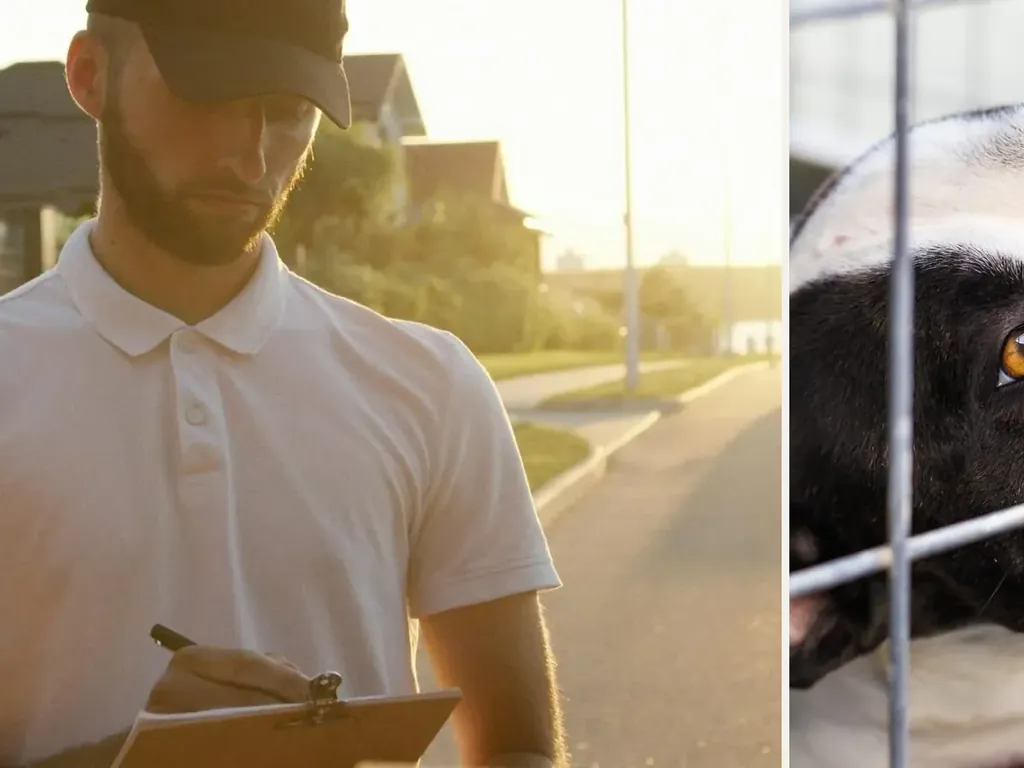
Washington L&I uses a dog bite as one of its own examples of a third-party workplace injury.
That matters because people are often told the opposite: if the bite happened while you were working, workers' compensation is the only system involved. When a dog owner who is not your employer or co-worker caused the injury, Washington law can put workers' comp and a third-party claim on separate tracks.
Workers' comp and a third-party claim are not the same thing
Workers' compensation addresses an injury arising out of work for a covered worker. A third-party claim asks whether someone outside the worker's employer or same employ is legally responsible for causing that injury.
Washington L&I's current guidance gives examples of third parties and expressly includes “the owner of an animal that bit you.” It also says workers are entitled to workers' compensation benefits regardless of who caused the workplace injury.
For an actual dog bite, the civil claim against the owner is governed by Washington's dog-bite statute. RCW 16.08.040 makes the dog owner liable when the statutory conditions are met, including when the person bitten was in a public place or lawfully on private property.
L&I specifically recognizes the animal-owner claim
This is not an analogy borrowed from a car accident case. It is the agency's own example.
Under RCW 51.24.030, when a third person outside the worker's same employ is or may become liable for an injury covered by workers' compensation, the worker or beneficiary may elect to seek damages from that third person.
A delivery driver bitten at a customer's home is an easy example. If the driver is a covered worker and the homeowner's dog causes the injury, the workers' compensation claim concerns the on-the-job injury. The third-party claim concerns the dog owner's civil responsibility. The existence of one does not erase the other.
What happens to workers' comp benefits while the third-party claim proceeds
L&I says workers' compensation benefits can continue while the worker pursues the third-party action. Its election materials likewise state that benefits are not simply stopped because the worker chooses to pursue the outside party.
The worker does have obligations to keep L&I or a self-insured employer informed. If a lawsuit is filed, RCW 51.24.030 requires notice to the department or self-insurer. The agency can assert its statutory interest in the recovery and may intervene to protect that interest.
L&I can also require the worker to make an election about who will control the third-party claim. Current RCW 51.24.070 sets procedures for that election and for assignment of the action if the required steps are not taken.
L&I reimbursement changes the settlement accounting
A third-party recovery is not calculated as though workers' compensation never paid anything.
L&I states that it must be reimbursed from a third-party recovery under Washington's statutory system. The distribution rules live in chapter 51.24 RCW and depend on the benefits paid, costs of obtaining the recovery and the facts of the claim. That is why using a made-up reimbursement percentage is wrong.
Settlement can also require coordination with L&I. The agency's current guidance says written approval is required when a proposed settlement would result in L&I receiving less than the amount of benefits paid or estimated to be paid in the future.
That makes the third-party accounting part of settlement strategy, not paperwork to figure out after the release is signed.
Employee vs. gig-worker status can change the workers' comp side
A delivery app, 1099 form or “independent contractor” label does not answer Washington workers' compensation coverage by itself.
L&I's current independent-contractor guidance says workers are covered unless they fit the state's exemption rules, and that a 1099 form has no bearing by itself on workers' compensation coverage. L&I also has separate guidance for gig and remote work because the classification question can require a specific legal test.
That cuts both ways. Do not assume every DoorDash, Uber Eats or other app-based driver has Washington workers' compensation coverage. Do not assume a gig worker lacks it simply because the platform calls the person an independent contractor. The coverage status has to be checked.
Evidence that matters when the bite happened on a delivery route
Work-related bites often come with unusually good time-and-location evidence. Preserve it.
- the delivery or work assignment showing the address and time;
- app screenshots, dispatch records or route logs;
- photos of the location and injuries, if they can be taken safely;
- the customer's or property occupant's identity;
- animal-control and police incident numbers;
- witness information; and
- the workers' compensation claim number and third-party election correspondence.
Those records can establish why the worker was lawfully at the property, connect the injury to the job, and preserve the facts for both systems.
Two tracks need one coordinated strategy
The dog-bite claim and the workers' compensation claim are not duplicates. They have different rules, different payors and different accounting consequences.
The clean way to handle the overlap is to identify coverage status early, preserve the third-party claim, keep L&I or the self-insurer informed, and account for the statutory reimbursement interest before settlement becomes final.
The office handles Washington dog-bite claims across King, Pierce and Snohomish counties. A review costs nothing, and there is no fee unless the claim resolves in your favor.